

If you want a delicious and healthy snack, make these vegetarian spring rolls. This recipe is a twist on a traditional pork and shrimp filling for gỏi cuốn (Vietnamese spring rolls) as a vegetarian version. I love vegetarian food, and with every vegetarian meal I always want a way to get enough protein in each bite. Learn tips on how to wrap spring rolls, what types of veggies to use, and my favorite protein options.
What are Vietnamese spring rolls?

You might be familiar with gỏi cuốn (literally meaning ‘salad roll’) if you’ve ever eaten at a Vietnamese restaurant. Gỏi cuốn is typically filled with lettuce, herbs, pork, and shrimp, then dipped in a peanut sauce. The recipe in this post for vegetarian spring rolls is inspired by traditional Vietnamese spring rolls and offers an alternative for those who want a plant-based option.
Rice paper wrappers

Rice paper wrappers come in many shapes, sizes, and brands. Make sure you are buying rice paper wrappers, not wheat-flour-based spring roll wrappers, because the latter need to be fried and are meant for dishes like lumpiang Shanghai.
Growing up, my mom often used the Three Ladies Brand, but I’ve also used the Dynasty brand whenever I can’t find the former. Rice paper wrappers come in circular or square shapes, and I’ve gotten used to using the round ones, but both will work. Buy wrappers with a diameter of at least 8 ½ inches, so you have enough surface area to add fillings and still easily roll it up.
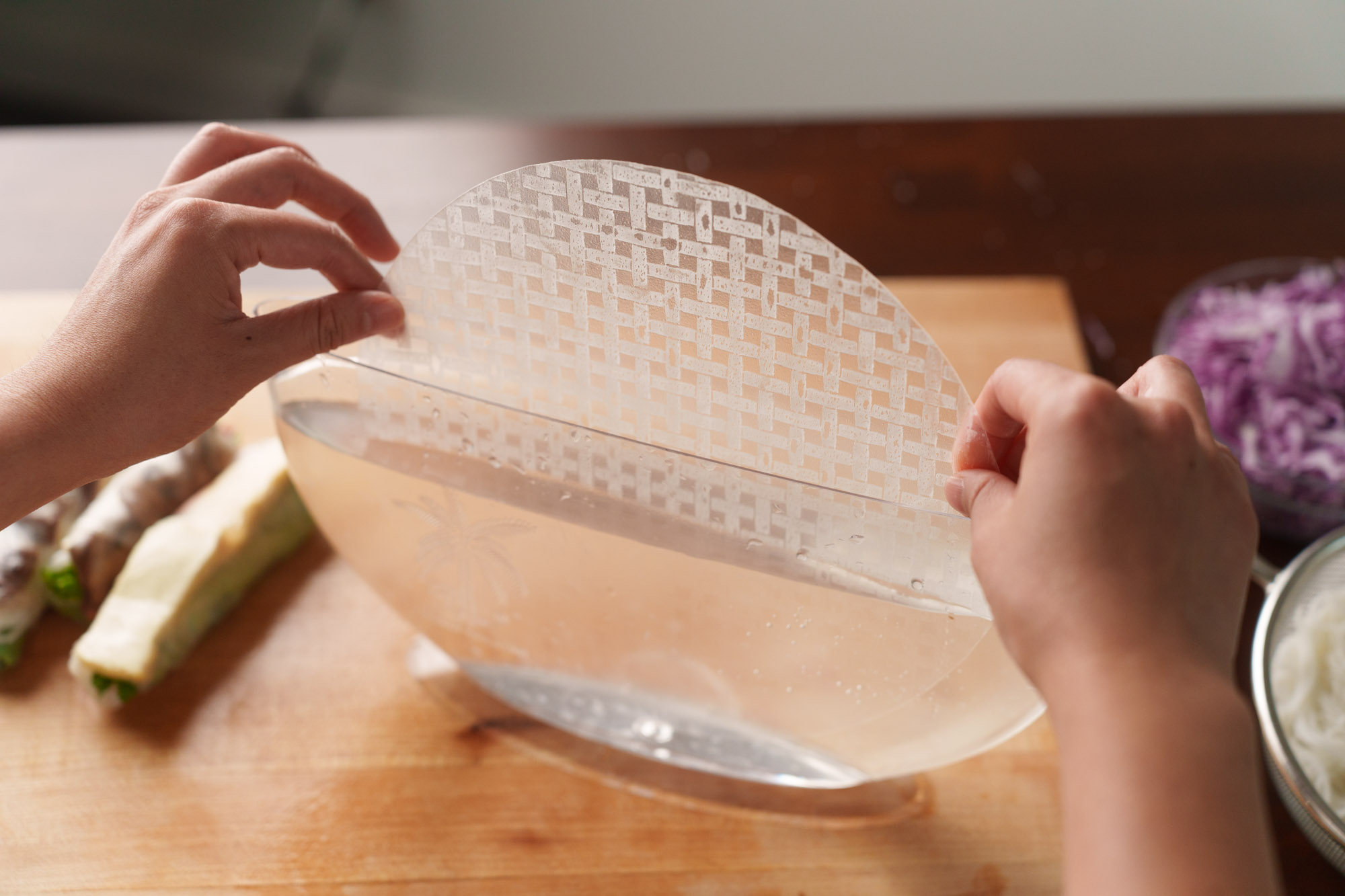
Rice paper wrappers are typically fully dried, and you need to dip them into water to soften them for rolling. We use a rice paper water bowl with a semi-circular water reservoir so you can easily soak the entire wrapper without taking up a lot of table space. It also holds extra rice paper wrappers on the side. But if you don’t want to purchase any extra tools, you can also use a wide, shallow plate or bowl of water and dip the rice papers in.
There are also “soft” rice paper wrappers that don’t need to be dipped into water. Soft rice paper wrappers are thinner than traditional styles. As you fill and roll up your ingredients, the filling’s dampness will lightly soften the wrapper (though it will still be slightly crunchy), and you can eat it without softening it. This is great for eating outdoors where you don’t have to bring water to activate the rice paper, but I’ve become more accustomed to the softened wrappers.

Rice noodle filling options

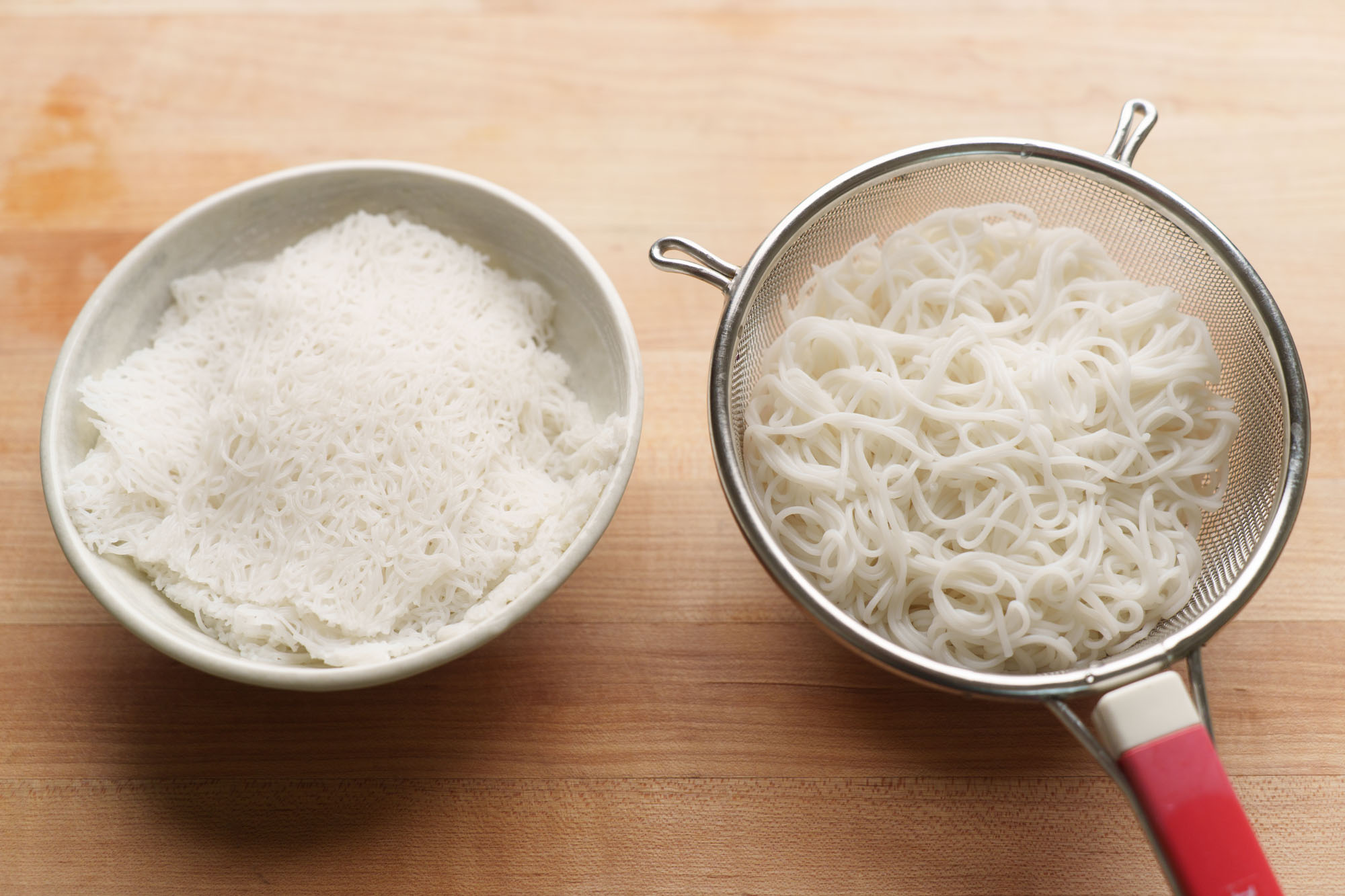
Tradtionally, spring rolls are filled with rice noodles. This gives the rolls more bulk, and carbs, I find give it a nice balance. You could ditch it altogether if you want a lower carb options, but the rolls get too veg-heavy or protein heavy per bite in my opinion.
A good option for these fresh rolls are to use medium or small sized rice noodles. Thick rice noodles for bún bò Huế works in a pinch, but can be extremely large, harder to portion, and a bit more chewy.
See my post dedicated to cooking rice noodles for the best results.
Veggie & herb filling options

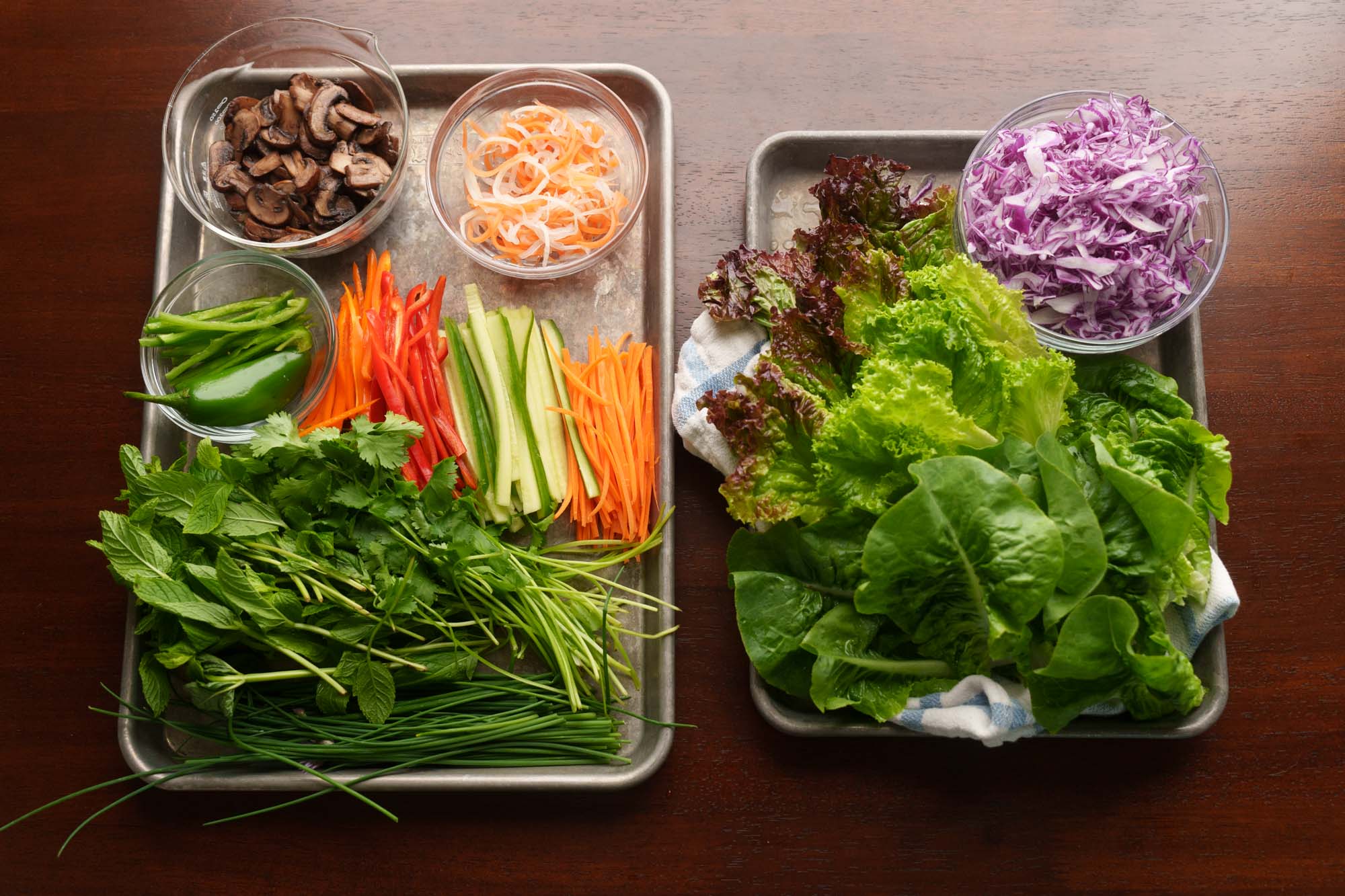
The bulk of spring roll fillings are typically vegetables and the sky is the limit. Here are some traditional vegetables and herbs options:
- herbs – rau rǎm, mint, cilantro, Thai basil
- greens – green leaf lettuce, thinly shredded cabbage, romaine lettuce
- vermicelli rice noodles or bánh hỏi (sheets of rice noodles)
- vegetables – carrots, cucumbers, jalapenos, sweet peppers
- đồ chua (Vietnamese pickled daikon and carrots)
- green onions and chives
Protein filling options

Traditional gỏi cuốn (Vietnamese spring rolls) have pork and shrimp filling, but we’re easily swapping that out for a vegetarian option here. Here are some of our go-to vegetarian-friendly protein options:
- Tofu: crispy fried tofu, air fryer tofu, baked tofu, or plain firm tofu cut into thin sticks. Asian markets offer many variations on prepared tofu. Fried varieties are much more resilient and won’t break as easily during rolling, also providing a nice chewy texture compared to just plain tofu.
- Seitan: flavored and prepackaged
- Plant-based meat: chicken or steak pieces. We’ve tried Daring Original Plant Chicken Piece and Beyond Steak – steak tips. We seared them on the stove, and they stick to stainless steel pans so we recommend oil to prevent sticking or toasting the pieces in the oven. We liked the Beyond Steak – steak tips the best and actually ended up using that for adding to soups too!
- Sauteed mushrooms

Tips for wrapping spring rolls
Learning how to roll spring rolls is easy to learn, but here are some tips we’ve learned over the decades of making spring rolls:
- My mom showed me this tip: cut up some rice paper sheets into roughly ¼ or ⅓ of a full sheet size to use as reinforcements, by placing it in the middle of the spring roll before assembly. This helps prevent breakage since we apply pressure to keep a tight roll.
- Keep your rolling surface and your hands damp with water. This prevents the rice paper wrapper from sticking and breaking. I dip my hands into the water bowl to wet them and then pat the excess onto the rolling surface after every other roll.
- Less is better! Try starting with fewer filling ingredients for your first roll so you know how much the wrapper can take without breaking. Then adjust filling amounts on future rolls as needed, because it’s very easy to overfill and break the roll. For example: start with ¼ c of rice noodles, 1 small leaf lettuce, up to 4 batons of vegetable slices, and 2-4 pieces of protein.
- Use bánh hỏi (small rice noodle sheets) instead of traditional medium-thickness vermicelli rice noodles for faster prep and easier noodle handling.
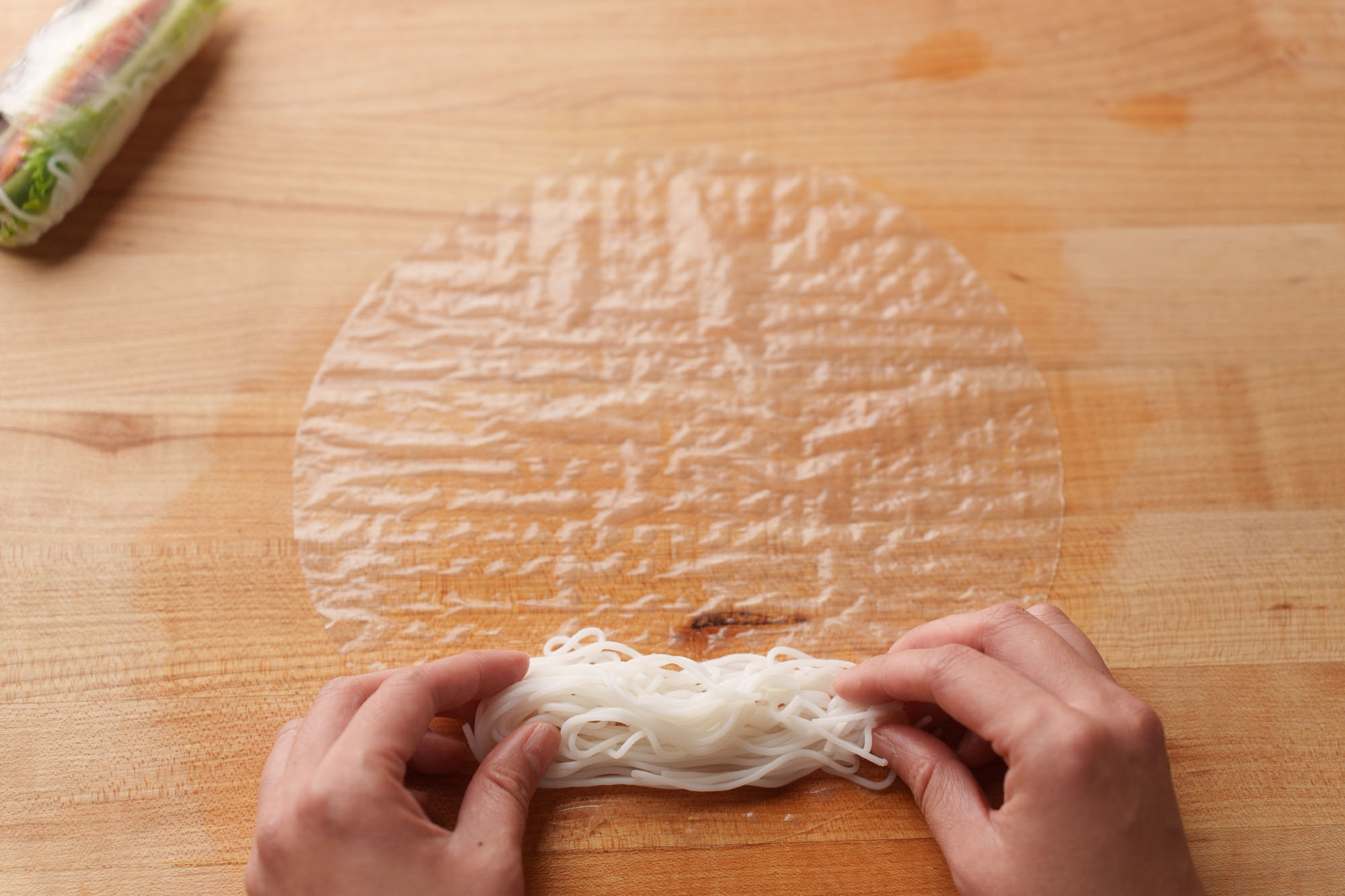
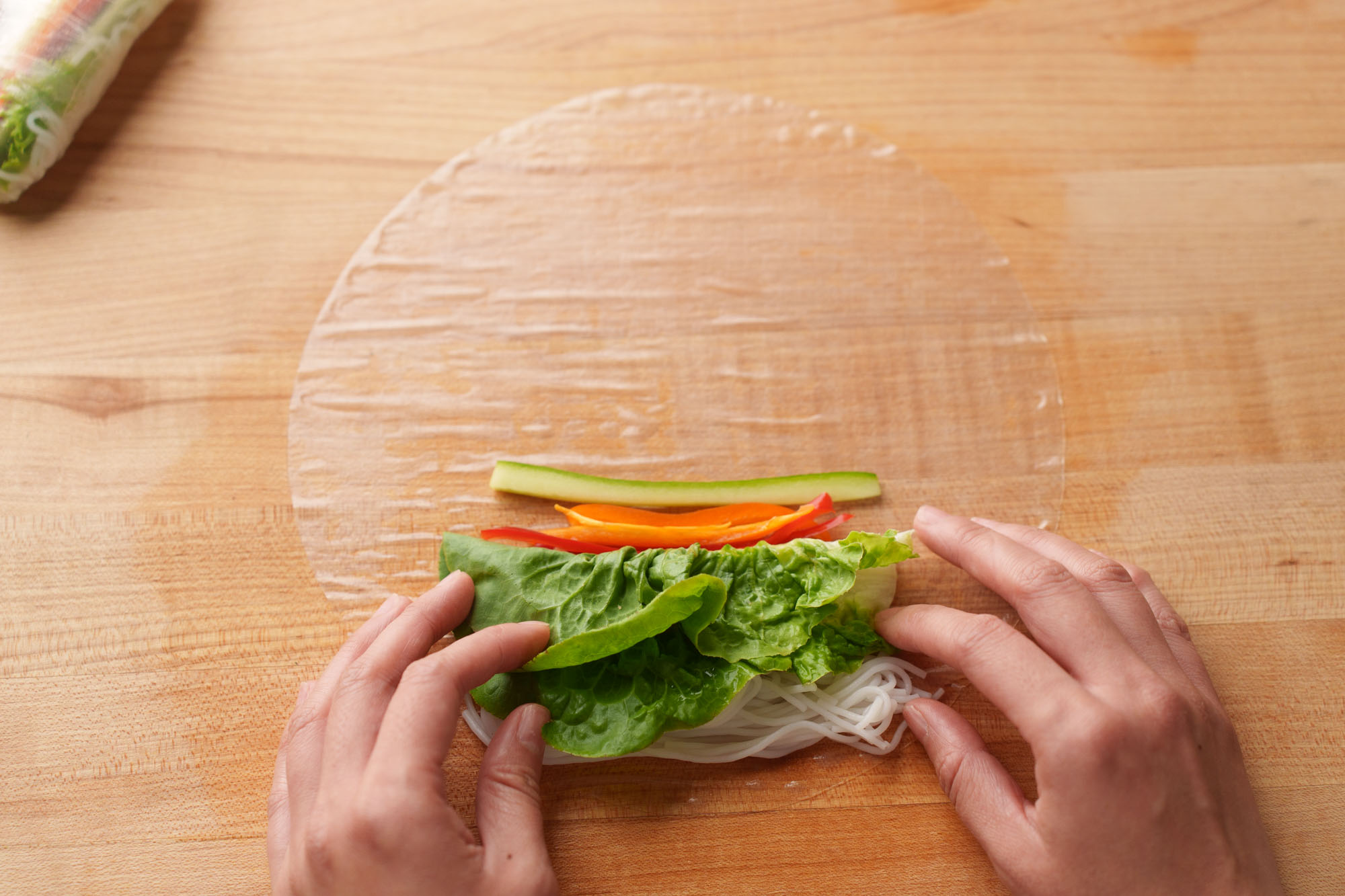
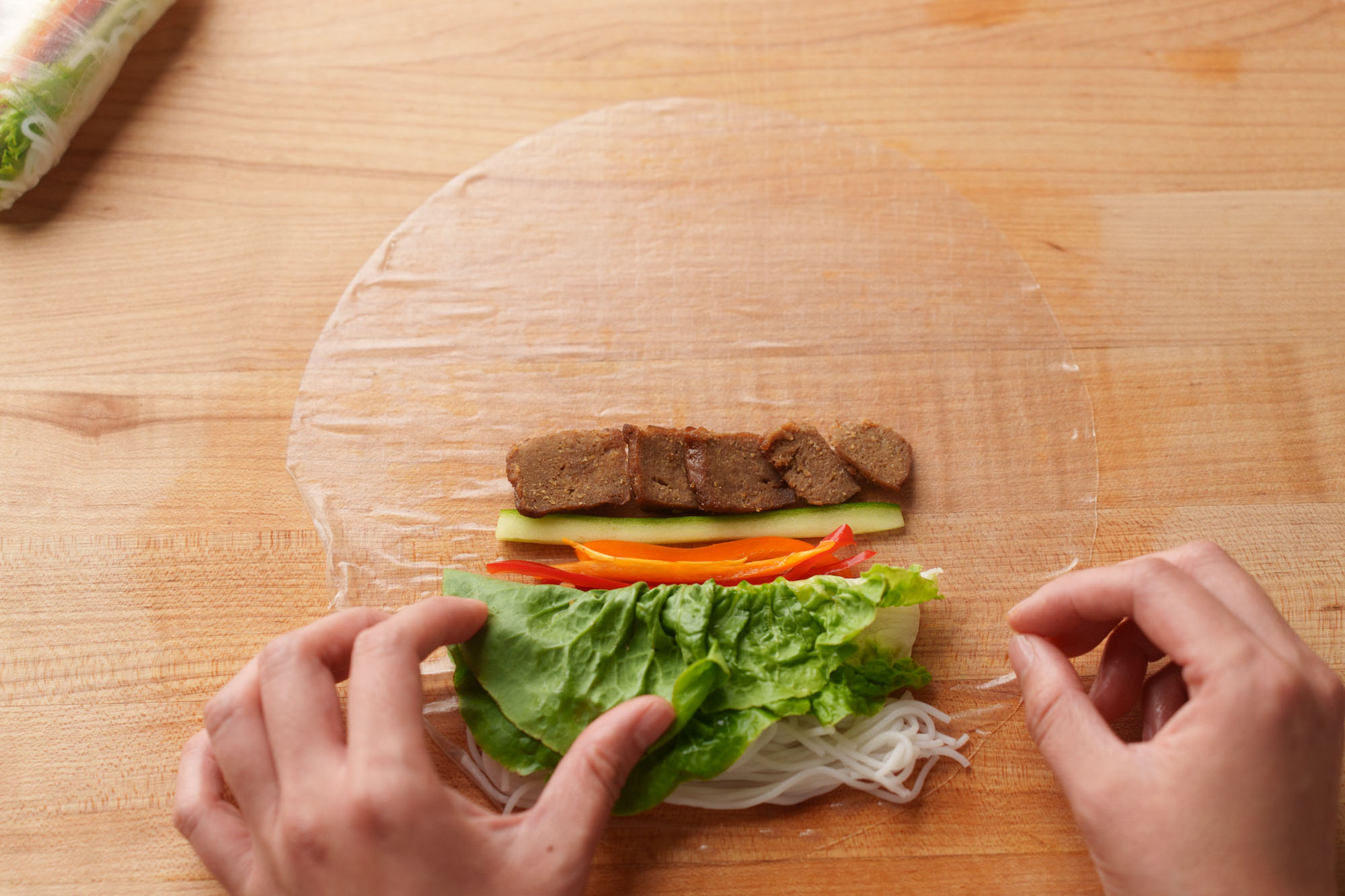
- Add the ingredients in rows instead of stacking them on top of each other. For example, place the noodles and lettuce at the bottom of the wrapper, then add the vegetable batons in the row above, and lastly place the protein in another row above the vegetables. This keeps the fillings from popping out while rolling and gives you a smoother spring roll.
For a more substantial breakdown on how to wrap fresh spring rolls, visit our step-by-step guide on how to roll spring rolls.
Dipping sauce

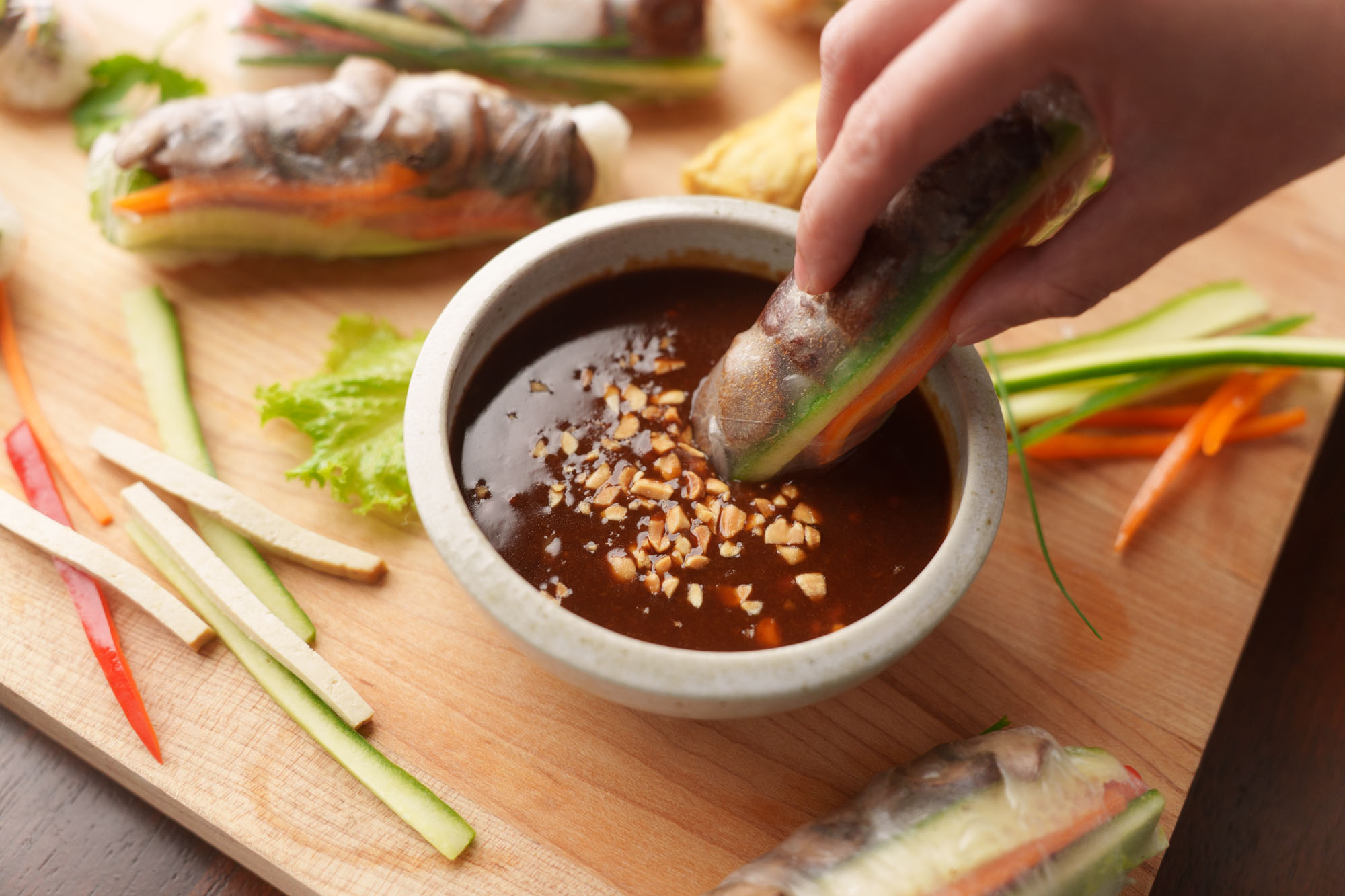
No matter the variety of spring rolls, we like using our Vietnamese peanut sauce to dip these vegetarian spring rolls. Visit that post for full step by step pictures. This is the same recipe we use for gỏi cuốn (Vietnamese spring rolls with shrimp and pork), and it’s full of rich, nutty, and umami flavor, perfect for light and fresh spring rolls.
Making ahead & storage

You can prepare most of the ingredients for vegetarian spring rolls ahead of time, but we recommend boiling the noodles fresh to keep the bouncy texture. We recommend rolling and eating spring rolls as you go (because it’s more fun and collaborative), and the ingredients are fresh.
You can premake the rolls, but we recommend eating them the day of so that the texture of the ingredients doesn’t change. The main issue with making these ahead of time is that the rice paper wrappers will harden when dried out or placed into the fridge. It’s then difficult to soften the rice paper without cooking the veggies inside, which should stay cold or at room temperature.
You can make the peanut sauce ahead of time and let it sit on the counter until it reaches room temperature before serving, so it’s not too thick.


Vegetarian Spring Rolls
Ingredients
Sauteed mushrooms
- 1 c sliced mushrooms
- kosher salt
Peanut dipping sauce
- 2 tbsp neutral oil
- 4 cloves garlic minced
- 5 tbsp hoisin sauce
- 2 tbsp peanut butter
- ½ c hot water
- 1 tsp Sambal chile paste optional
- 3 tbsp crushed peanuts
Filling
- 6 oz vermicelli rice noodles bánh hỏi
- 1 head greens green leaf lettuce, shredded cabbage
- 1 bunch herbs rau ram, mint, cilantro, Thai basil
- 1 medium carrots julienned
- 2 Persian cucumbers julienned
- 2 sweet peppers julienned
- 1 small jalapenos thin slices
- 1 c đồ chua Vietnamese pickled daikon and carrots
- green onions batons
- chives
- 16 oz protein cut into thin ¼-inch batons (tofu, seitan, plant-based meat)
Wraps
- rice paper wrappers
- water
Equipment Used
- measuring cups and spoons
- knife and cutting board
- saute pan
- sauce pan
- storage container
- paper towels, or hand towels
- Strainer
- large bowls
- rice paper bowl or dinner plates
Instructions
Sauteed mushrooms
- In the same pan over medium heat, add 1 c sliced mushrooms and stir to cook until softened, about 3-5 minutes.
- Add kosher salt and stir again. Transfer to a bowl and set aside until assembly.
Peanut dipping sauce
- In a saucepan over medium heat, heat up 2 tbsp neutral oil and add 4 cloves garlic. Cook and stir until aromatic, about 30 seconds.
- Add the 5 tbsp hoisin sauce and whisk until incorporated. Lower the heat to low.
- In a small bowl, combine 2 tbsp peanut butter and ½ c hot water. Whisk until thoroughly combined. It should have a thinner yogurt consistency.
- Add the peanut butter to the hoisin pan and whisk until incorporated.
- Raise the heat back to medium-high and bring to a boil, stirring frequently, about 1-2 minutes.
- Once it reaches a boil, turn off the heat and add 1 tsp Sambal chile paste if you prefer. Stir to combine. Pour the sauce into a heat-safe jar and sprinkle with 3 tbsp crushed peanuts. Set aside until serving.
Prepare your spring roll station
- Prepare the 6 oz vermicelli rice noodles based on the packaging and set aside until assembly.

- Prepare your vegetables (1 head greens, 1 bunch herbs, 1 medium carrots, 2 sweet peppers, 2 Persian cucumbers, 1 small jalapenos, 1 c đồ chua, green onionsand chives) and 16 oz protein on a tray.
- Set up your rolling station with:A. Add room temperature water to a rice paper bowl. If you don’t have a rice paper bowl, you can use a dinner plate with water.B. One large cutting board to make the rolls. Dampen the surface of the cutting board to help prevent sticking.
To make a vegetarian spring roll, follow these steps:
- Dip a sheet of rice paper wrappers into the water, making sure all parts are coated.

- Lay the wet rice paper onto the cutting board.
- Place the rice noodles onto the bottom-center section of the rice paper.

- Add your preferred herbs and vegetables on top of the noodles.

- Add proteins above the veggies, roughly in the center of the rice paper.

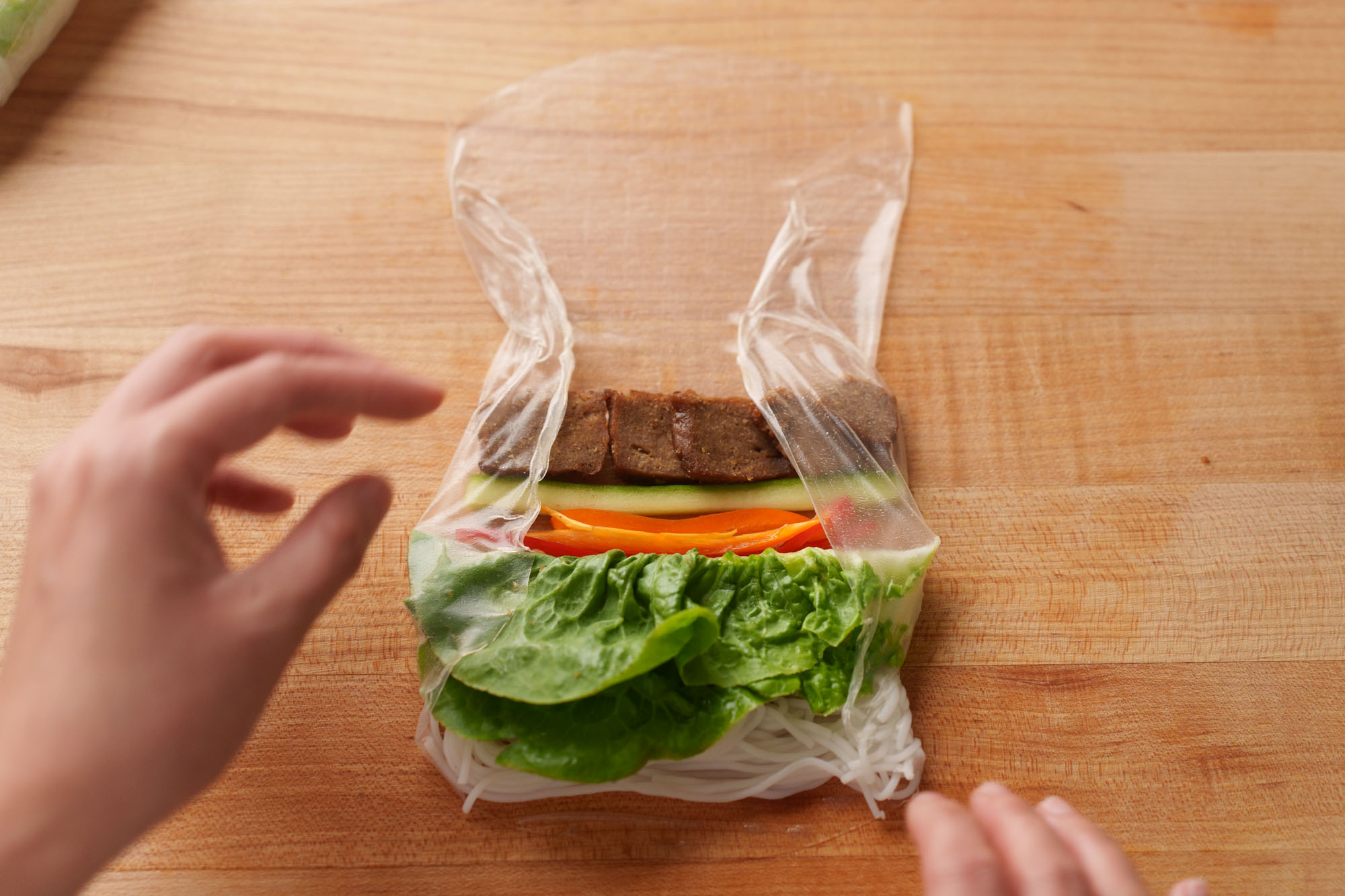
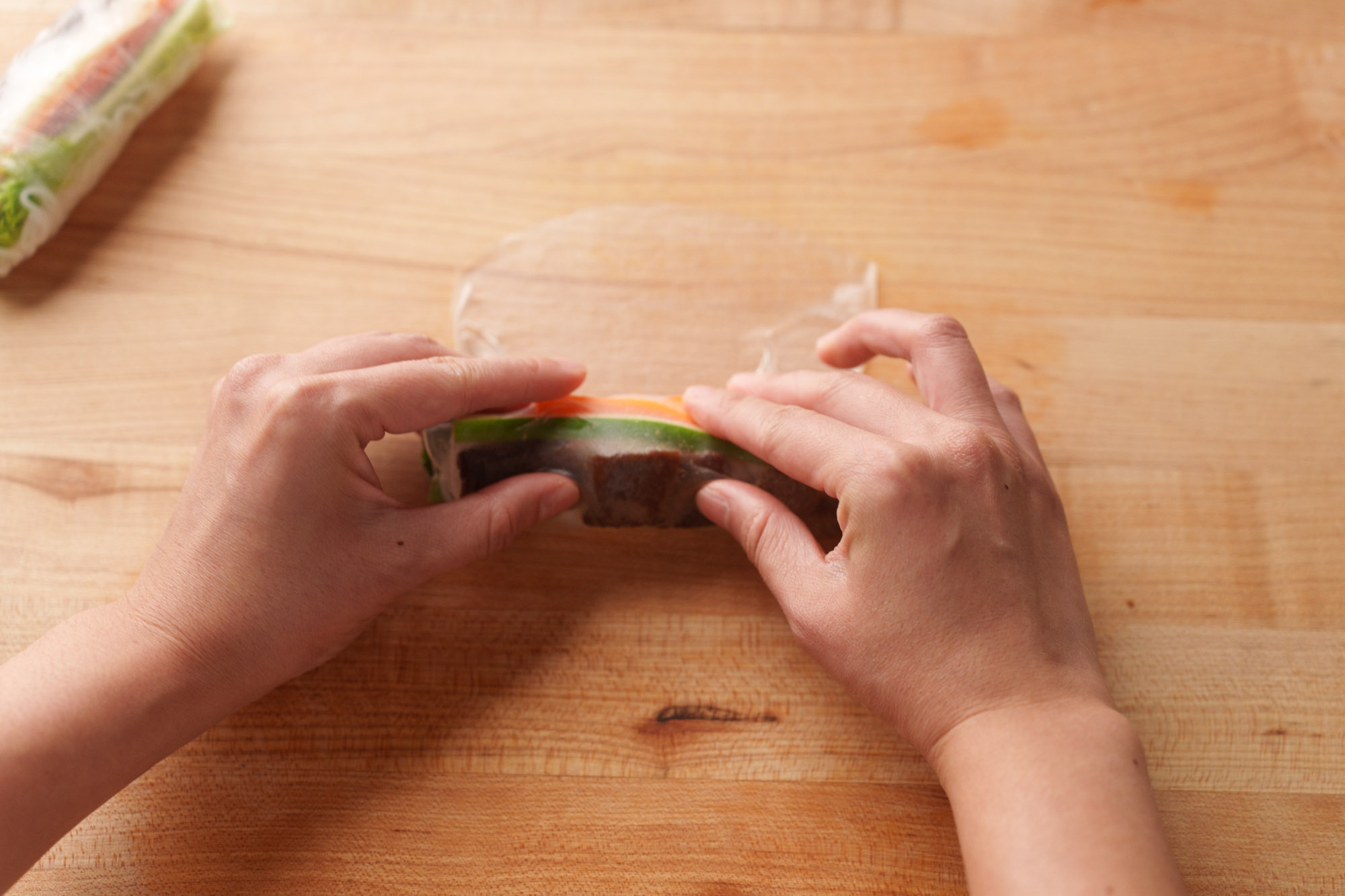
- Fold the left and right sides of the rice paper toward the center, covering the fillings.

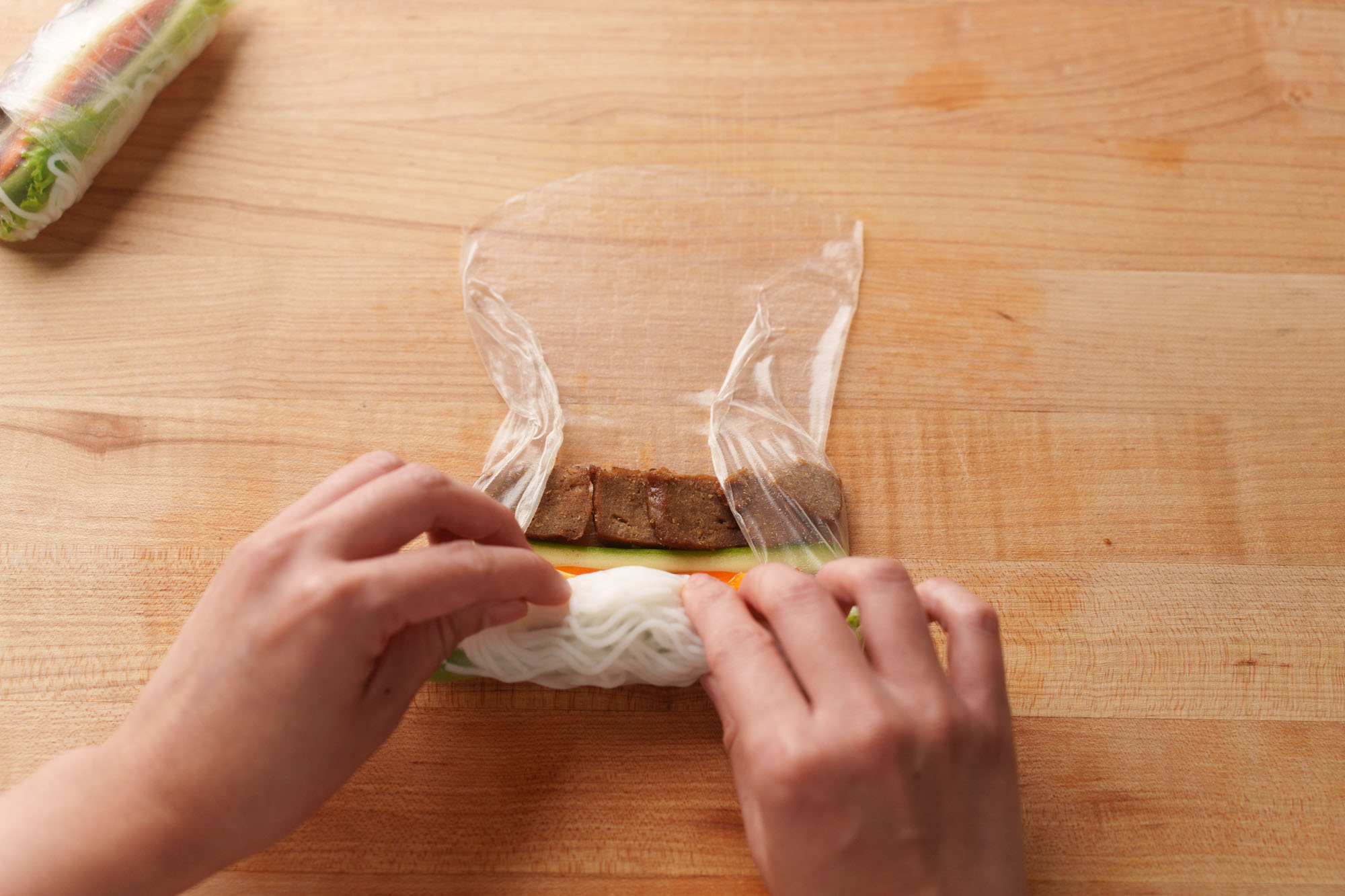
- Lift the bottom of the rice paper and begin rolling upward, carefully compressing as you go to make a tight spring roll.

- Keep the pressure on the fillings throughout the roll, so they don't bounce upward, and you can maintain a tighter roll, which looks better and is easier to eat.

- Serve with the peanut dipping sauce.
Like this recipe? Subscribe to my newsletter!


